Kosher Nostra: The Purple Gang and Prohibition-Era Detroit


 Apple Podcasts

 Spotify

 RSS Feed

 Pandora

 Deezer

 iHeartRadio
Gregory Fournier, author of The Purple Gang: Detroit’s Kosher Nostra, joins the podcast to explore the rise and fall of one of America’s most notorious Prohibition-era crime syndicates.
During the 1920s and 1930s, Detroit’s Purple Gang—led by the Bernstein brothers—sat atop Michigan’s criminal underworld, controlling bootlegging, rackets, and labor intimidation while doing business with figures like Al Capone. Though later eclipsed by the Mafia in Detroit, the Purple Gang left an outsized mark on American crime history and popular culture, appearing in books, films, and even Elvis Presley’s “Jailhouse Rock.”
This episode traces the gang’s meteoric ascent, their operations throughout northern Michigan—including hideouts in Lupton, Clare, and Roscommon—and their ultimate collapse under the weight of internal violence and unchecked ambition. It is a concise historical examination of power, mythmaking, and self-destruction in America’s criminal past.
-------
Visit author Gregory Fournier's website and find all of his true crime books.
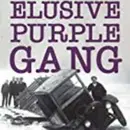
Order The Elusive Purple Gang by author Gregory Fournier. #purplegang #jailhouserock #alcapone
👉Subscribe to The Mitten Channel
Join us for the full experience. Subscribe to The Mitten Channel on Substack to receive our latest narrative essays, audio stories, and deep-dive reporting directly in your inbox.
Explore Our Series:
- Radio Free Flint: Narrative storytelling and community perspectives on industrial resilience.
- The Mitten Works: Essential history and analysis of labor and economic policy.
- Flint Justice: Critical insights into the legal and institutional challenges facing our state.
Visit our Mitten Channel website for our complete library of podcasts, videos, and articles.
The Mitten Channel is a production of Radio Free Flint Media, LLC. © 2026 All Rights Reserved.
Visit our website at www.radiofreeflint.media to subscribe to our free newsletter to receive our latest episodes.
0:22 The Purple Gang, also known as the Sugarhouse Gang, was a criminal mob of bootleggers and hijackers with predominantly Jewish members. They operated in Detroit, Michigan during the 1920s, that was of the Prohibition era, and came to be Detroit's dominant criminal gang. Excessive violence and infighting caused the gang to destroy itself in the 1930s, all this according to Wikipedia. In popular culture, although heavily fictionalized, the 1935 film Public Hero Number One deals with the hunting down and capturing of the Purple Gang.
1:03 Jill House Rock by Elvis Presley mentions the Purple Gang. In the song You Can Hear, the whole rhythm section was the Purple Gang. In 1959, the film The Purple Gang was heavily fictionalized, including details of the gang's rise to prominence. In 1960, the second season episode of The Untouchables, simply titled The Purple Gang, provides a fictional account of the Purple Gang's kidnapping of a mobster courier. It's been rumored that the Purple Gang's illicit profits from the rackets in Detroit were funneled into building two of Las Vegas' casinos at the time, the Satellite and The Frontier.
1:50 Ian Fleming refers to the Purple Gang in his James Bond novels Diamonds Are Forever, Goldfinger, and The Man with the Golden Gun. The Purple Gang was also referenced by Ross McDonald in his 1952 novel The Ivory Grin. Although he was gunned down in the first scene, Max Allen Collins identified the Roden as a Purple Gang torpedo in his novelization of the 1990 blockbuster film Dick Tracy. An episode of Detroit's 187 featured a man whose grandfather was a member of the gang. The Purple Gang began to terrorize Detroiters with executions of their enemies.
2:33 Among their victims was the city police officer Vivian Welsh, killed on February 1st, 1927. He was later revealed to be a dirty cop who was reputedly trying to extort money from the Purple Gang. In 1931, an inter-gang dispute ended in the murder of these three purples by members of their own gang. Chicago gangsters who had been imported to Detroit to help out the Purple Gang had violated an underworld code by operating outside the territory allotted to them by the Purple Gang. Jaime Paul, Isidore Sutker, also known as Joe Sutger, and Joseph were lured to an apartment on Collingwood Avenue on September 16, 1931.
3:17 They believed they were going for a peace conference with the Purple leaders. After a brief discussion, the three men were gunned down. Authorities caught up with the gang when they burst into Fletcher's apartment and found the suspects, Abe Axler, Irving Milberg, and Eddie Fletcher. From their rise to the top of Detroit's underworld to their ultimate demise, this is an episodic account of the Purple Gang's corrosive pursuit of power and wealth and their inevitable plunge towards self-destruction.
3:58 Mr. Fournier is a top award author, and we're going to talk to him about his book, The Elusive Purple Gang, Detroit's Kosher Nostra. Mr. Fournier's book is an episodic account of the Purple Gang's corrosive pursuit of power and wealth and their inevitable plunge towards self-destruction. Mr. Fournier is born and raised in Trenton, Michigan, and he's now retired and living in San Diego. Good morning, uh Greg. Yeah, thanks for having me. Oh, it's my pleasure. Now, the name of your book, which you wrote about the Purple Gang, is The Elusive Purple Gang.
4:39 And the subtitle is Detroit's Kosher Nostra. The keyword is elusive because so much of the historical record is obscured. It's mixed up with legend, and uh frankly, a lot of wishful thinking and faulty memories. So to uh write the book, I had to wade through hundreds of newspaper articles uh and every book I could find on the subject. And remarkably, there aren't uh that many. Uh and the the reigning expert uh for the purple gang is Paul Kafayev. And he wrote a couple of books and did a uh images of America photo book.
5:21 So he's got three books out on the uh the purple gang, you know, and they're very good and documented uh uh properly. So I I wanted to write us a narrative story um and not a documented piece, uh, you know, some popular uh nonfiction. The average person could pick up not only uh be uh educated a little bit about about the uh the purple gang, but also to uh get a feel about who these these guys were because they uh that's where I'd like to start right there, who these guys were and how they got started. And in doing research for this uh interview, I learned that in uh 1916 there was an act called the Damon Act, which essentially prohibited alcohol prohibition act following year.
6:13 The Purple Gang and the other gangs, uh the mafia gangs, had a two-year head start on prohibition and being right across the river, Detroit River, you can see the distilleries, yeah, it's only a mile, that they were ideally positioned to get on the ground floor for prohibition. And uh, you know, once they had that locked up, uh anybody who tried to to poach or you know muscle their way in on territory uh did so at their great peril. So the purple gang essentially was a rum-running gang. Well, they they uh eventually became that. They started out, you know, just street punks, pushcart, uh shoplifters uh in the uh eastern market area, which is where they're from, the Hastings Street area that later became famous for uh jazz uh music and you're talking about the city of Detroit.
7:09 The city of Detroit, yeah. And that was when they were young. But they uh uh started as muscle men, uh went around and intimidated people to uh join the Cleaners and Dryers Association, uh which they uh run ran. Uh Abe Bernstein was one of three people who owned it. Uh from there they uh they got their name. And once they had the notoriety and they knew how to make some money, they did get into the protection rackets, the snatch racket, uh, which was kidnapping high-rolling uh gamblers and gangsters because it was relatively safe. Watch a guy, you'd pick him up, you'd put him in a house for two or three days, tie you know, tie him to a chair, and then uh after a while, you know, whatever the money was, uh the the arrangements would be made and the guy would go home, but he wouldn't go to the police.
8:04 So it it was uh big moneymaker for the uh the purple gang, and of course their big, big moneymaker uh was prohibition, and they were in league with Al Capone. Right Capone was not a competitor. Now when you call him the kosher the kosher Nostra. Nostra, it's a play on words because Yep, because it means nothing if you really break it down. Well they're Jewish. All of uh ranking members uh were Jewish, and they they worked with anybody. They worked with Irish, uh they worked with the Italians, they worked uh the black community, especially in the numbers racket, where they also made a lot of money.
8:46 Uh gambling was a big part of their operation too. So they they had two money sources. Two of the brothers ran uh the gambling pyre, and two of them uh ran the uh street operations. They dropped out of school. They were troublemakers, they got put into the ungraded, uh, which was essentially a crime college. And so all these uh guys, many of them, not all of them, but many of them quit school before they were eight years old. They could make money and they had to. They had big families, they were from immigrant families. Many of these gangs that start out, they start out as sort of scavenger gangs. They do they do crimes of opportunity, they roll somebody on the street or they you know, then they start getting the idea that they can be entrepreneurial.
9:35 And they were businessmen. They became uh uh businessmen and they were very successful. How did they get this name and who who, if you know, gave it to them? Well, the the name has all sorts of stories uh about the derivation, and the one that is about 10 or 12 of them, young 20s, 21, 22, bunch of young guys, and they were the muscle for this cleaners and dyers operation. Well, they all got rounded up uh in a pickup police stations, and you know, you get their stories and so on. So uh some of the press are there and say, Who are these guys? And uh the inspector of the gang and bomb squad, his uh the name was Inspector Garvin, told the press, oh, they're Purple's gang.
10:24 And there was this uh he had hired these guys, he was like their mentor and he gave them jobs and intimidate this person or that person. So they were connected with Sammy Purple. When Garvin said that, you know, the the newspaper people went home for the first time, they were named the Purple Gang, not Sammy's or Purple's gang. So the Purple Gang as a separate entity. Not to be cute, but the g the name was very colorful. Like I said, it was shorthand in the press and with the police. They became, in short order, the marquee gang in in Detroit, and the only Jewish gang that controlled the whole racket, the rackets for a whole city, denote influence.
11:14 I did see some reference that this organization got involved in drugs. They do a little bit later on, and uh one of the Bernsteins in particular, Raymond Bernstein, if you'll see pictures of him, he's got dark, dark rings under his eyes, almost in everything you see. Although I haven't seen any direct documentation. I've been around enough junkies and people to know what the look is. You know, he had that that look. So I believe he was hooked on it, and his uh brother almost got shot to death by one of their one one of his own people who was a opium dealer and probably dealt with heroin too, but you know, opium uh uh smoking opium was is that well they did, and uh most of them uh two of the brothers got involved uh with the fisticuffs pretty well and uh uh were bullies and beat up uh people, uh Ray Bernstein, um and Joe Bernstein.
12:20 But Joe took a bullet in the gut from a an opium dealer, almost died, so he took a step back from the business, uh the street end of the business. Uh but he was the most entrepreneurially, that's a long word, gifted of the brothers, and uh he was the real businessman, and he was involved in some interesting things in uh the Clare Mount Pleasant area, uh oil leases and whatnot. This was after the gang imploded in 1933. By 1935, they they were gang uh former Purple gang members, but the gang had imploded.
13:00 Yeah, they they engaged in what some historians have referred to as the bootleg wars. Yeah. That would be Michigan bootleg wars. I don't know if that happened nationally, I assume it did. Well, there's a there in 1930, I believe it was, maybe 31, when there were two mafia factions, uh they called it the Italian crosstown, I believe was the label. Over 30 people, uh mostly uh Italians, but a couple of purple gang people that got shot in that uh uh bloodiest of periods in the whole gangland, uh Detroit gangland era. Thirty people died within uh under 10 months.
13:41 The result of that was there was an east side mafia and a west side mafia. Well, the east siders were kind of modern. They didn't care who they worked with if you could make them money. Again, you're referencing Detroit, the city of Detroit. East side and the west side of Detroit. Okay. Yeah, yeah. And the west side was uh run by uh uh uh people in uh Wynat, Michigan. Gang war took place, and the result is uh what became the modern mafia of Detroit, which was called the and what happened is the the new bloods killed out what they called the the mustache Pete, the old guard, the old Sicilian mafia, consolidated their power, and by that time the Purple Gang had imploded, and Abe Bernstein, the for the gang, cut a great deal, gave most of the rackets to the mafia, his numbers uh racket out of the book Cadillac Hotel.
14:38 He had a an office on the mezzanine, and you know it was an open secret. But he had the protection of the mafia. Some historians have said as many as 500 people were killed during this bootleg war, which they claim they claim was attributed to the uh purple gang. Now, I don't know if that involved fights with the mafia or not. I'm not sure. But uh, I think uh that that number is inflated, and you know, you worked on the side of the the law. The police often will inflate their numbers of arrests or this and that, you know, for the for uh press reasons, it seems.
15:20 The purple gang just in in the that's when they they were in control, yeah. Part of the reason that they rose uh so quickly was of course intimidation, but they cut a deal with Al Capone, Canadian whiskey, and in particular a brand that was made in uh Quebec called Old Log Cabin. You know, it had I think a hundred-proof, and there were a lot of old log cabin knockoffs. He got the good stuff from the Purple Gang uncut, and the Purple Gang cut most of their liquor. Quite a few liquor cutting plants in town around. Al Capone, of course, was a mobster in Chicago. Yes.
16:00 This pipeline between Detroit and Chicago was to funnel what the Purple Gang's regional competitive advantage was, which was access to the Canadian liquor market. There were two ends of that unlimited supply from Canada and unlimited demand in the Midwest, Chicago, Kansas City. You know, they weren't on the river, they couldn't see the distilleries. They had to have a pipeline, and it was Al Capone, uh the Chicago organization, I guess what they called it, uh took all of the purple gang liquor and distributed it through much of the greater Midwest.
16:41 The demand was greater than the supply. So Al Capone and the rest of his his henchmen, they were right they were frequent and regular visitors to Michigan and including mid-Michigan. Yes, yes. Uh uh hideout. Tell us about that. What do you know about it? I don't know the lake, but there is a lake just south of East Lansing, or Lan you know, Lansing, the state capital. Apparently uh it was an enclave for Italians in the area. And Italians back in those days, uh a lot of uh uh respectable white people did not want to hang out with Italians.
17:24 So uh they had this lake uh area, and Al Capone apparently uh and his gang owned a pretty uh nice stretch of beach property there all under the table, under the radar. If he had to get out of town and hide out somewhere, he would go there. And and he did that quite often. If he was gonna be in Michigan, and he also did some uh independent deals with uh the Canadians. So if he had to be in the area, he didn't be want to be right in Detroit. Somebody would knock him off. He was not Sicilian, he he was not a Sicilian mafia guy. Uh so Al Capone was also seen in places like Lupton, Michigan.
18:08 He was uh seen in places like uh the old uh Grousehaven, which many in Michigan would re would know who are campers, the Rifle River Recreation Area. What what if any history do you know about the Purple Gang and their activities in um mid-Michigan? That would include Clare as well as well as uh Ross Common and Ogomaw counties. Mike, uh one armed uh Gelfend had the Graceland Ballroom built in 1933, completed in 1933 in Rose Township on the Rifle River. One armed Mike, how he got his name, I I spent a good hour trying to figure that out yesterday.
18:52 Nobody knows, but I'm gonna float a theory. Uh he probably lost his arm in World War One uh as a veteran. He was uh uh a bootlegger and uh owned uh uh some bars uh you know associated with the Purple Gang. And uh so he figured, hey, I'm gonna build this not only Purple Gang, but other gangsters who are on the lamb uh uh from the police. And so um they had this uh thing built. And what I found out was interesting is that Mike Gelfin's sister acquired the land. It doesn't say inherited, but acquired the land quite a few acres.
19:34 It was thirty or forty acres. And he paid his sister one dollar for the land. Talk about a uh a a real estate bargain, but that's how it came to be Lupton and not West Branch or somewhere else. He had uh ready access uh to the land, had uh plans, him and his wife had plans drawn up and they built it. Ballroom that was really for uh the locals and and then guests from uh Detroit. Interesting, interesting place. Apparently a couple shootouts are in there. Uh there uh are supposed to be some bullet holes uh yeah in the walls and in the ceilings, uh you know, a lot of it's anecdotal.
20:24 Uh but uh Gelfin got out of the business in 37, only four years was was he uh uh you know an owner of it. I found and uh I didn't see the documentation, but apparently uh rumor has it that uh the lumber used to build that place was never paid for. A one-armed guy is not as intimidating as maybe a bunch of young purple gang uh guys coming in there because of the lumber business and so on. So Graceland Ballroom uh continued on uh long past the 30th. Yes, it did. 37 was when Golfin got out of the business, and uh my uh source says it burned down in 1981.
21:08 So not again, that's not too far from the Rifle River Recreation Area State Park, which is formerly called Grousehaven, which was owned by the Dodge family. Some houses that were built by Harry Jewett, who was connected to this family as the founder of Grousehaven hunting camp for these Dodge boys. And that would be entirely consistent with what you've described. Uh, this one hour Mike who started this hangout where the purple gang was notorious. Tell us about this place called the South Branch Ranch. Place they had an airport, they uh uh had buildings that were huge, and they could do all kinds of uh they had an Olympic pool.
21:53 Yeah, it was incredible, an incredible, uh uh almost like a sports uh complex uh that you find in a lot of cities today. What I learned about this purple game is that they somehow bought this South Branch Ranch, which was actually started and developed by Willie Durant, who those who are listening from Flint will know that's the William Durant that's the guy that started General Motors. Durant built this large ranch. It was known that the Purple Gang used to hang out there and hide, hide out there, as well as in the modern era, Jimmy Hoffa. And the local legend goes it that Jimmy Hoffa may be found out there if you want to dig in enough sand dunes.
22:39 Now, I heard that they would meet and hide out in Albion, Michigan, which is about halfway to Chicago. Albion is a whole other uh case. There were three uh Fleischer brothers who were all Purple Gang members. After the gang imploded, they went out to the w, you know, west side of the state, Albion, had a a number of uh concerns there, but they bought a junkyard on the edge of town, and ostensibly uh they were in the scrap metal business uh reclaiming autos, blah, blah. Uh but really the place was their headquarters uh because they had a uh burglary uh crew, and uh they they bought a um a Graham Page automobile.
23:32 Most people never heard of that. It was had a wider wheelbase than anything else that was out there. It had a V8 engine that was a screaming engine, and what they did is they put uh on one side of it uh double doors that opened out this way, like like uh a van in the back might do with two doors. Well, they had it on the side. Underneath the chassis, they welded out a ramp that they could roll down, and what they would do is they would steal safes and they go into a business, they you know, rob it, and there were they were very successful throughout uh Jackson and all that whole area, and uh roll get to say uh safe bang, get in and out, take it to this junkyard, and then they get in there with their torches or you know, whatever the they had to open it, and uh you can bet they opened it up.
24:30 Now they got uh into a uh uh an altercation with the police, and there were some bullet holes in the car across the street from the junkyard. There's a big barn. I don't know if they owned that too. Uh they put the car in there, thinking, well, who's gonna come around and see it? It's safe. Well, a local comes through and then they called the FBI, and then there was a big bust. And there's a picture of the car and all the police standing around. It's quite an interesting story. That was uh three brothers, Harry, Harry Fleischer. Well, Harry uh was uh one of the big time purple gang people up in the gang, didn't think much, his younger brothers.
25:13 You know, he's he didn't want them tagging along with him. So Harry was the tough guy. Later on in that area, uh, between Adrian and and Lansing, uh a few years later, again, the Purple Gang is defunct, but all these guys are former Purple Gang members and gets in the press, the Purple Gang. They killed a senator, yeah, and then they ended up going to prison for it. A senator, a state senator? A state senator, yeah. Uh he was uh going to pass some legislation or or uh veto something that the mob gambling people wanted.
25:55 And uh he was the deciding vote, and they just went out and uh and nailed this guy. Uh, you know, he's a state senator. And when that happened, the whole state, all the police, everybody, they had to get these guys, and they did, and uh, and they did uh a lot of time in Jackson uh and also in Marquette Branch Prison. All their rival gangs. That's true. And there was uh one hothead who felt he got cheated in a deal, and he said, you know, I'm gonna come over here and I'm uh you know, I'm gonna get my money, and uh he he did go over there, wherever that was. All he got was uh payment in lead, and then he was dropped off and uh dead in the street.
26:38 No, the the implosion of the purple gang and and that started uh major money makers for the ma for the the purples, so that had to be answered, and uh there were lots lots of uh instances. There was retaliation for that death, and I understand that there were three people and all killed in this indoor gang rivalry over territory. Oh, yeah, yeah. And there were uh Eddie Fletcher, they called him the Siamese twins because they were in a purple game, but they they were always together. They ended up uh trying to get a piece of the action after they got out of prison.
27:18 Abe Axler was one of the guys. So to wind up here, what do you think their legacy is? Uh they don't have much of a legacy, they have a reputation and there's a lot of folklore. They were a one-generation gang, so they didn't really have much of a legacy. And when they imploded, that was the end. It was a one-generational gang. History remembers them uh basically as brutal thugs, businessmen who were even were outlaws among their own community and with their families because they're they did the families didn't like it. By the time the game gang imploded, the mafia was the big game in town, and all the interest uh went with them, and they did have a multi-generational uh tradition in the Italian gangs.
28:10 Greg Fournier, thank you for being my guest today on uh Radio Free Flint.