Snowbirds, Split Lives, and the Meaning of Michigan My Home
Fly Away Home Snowbird
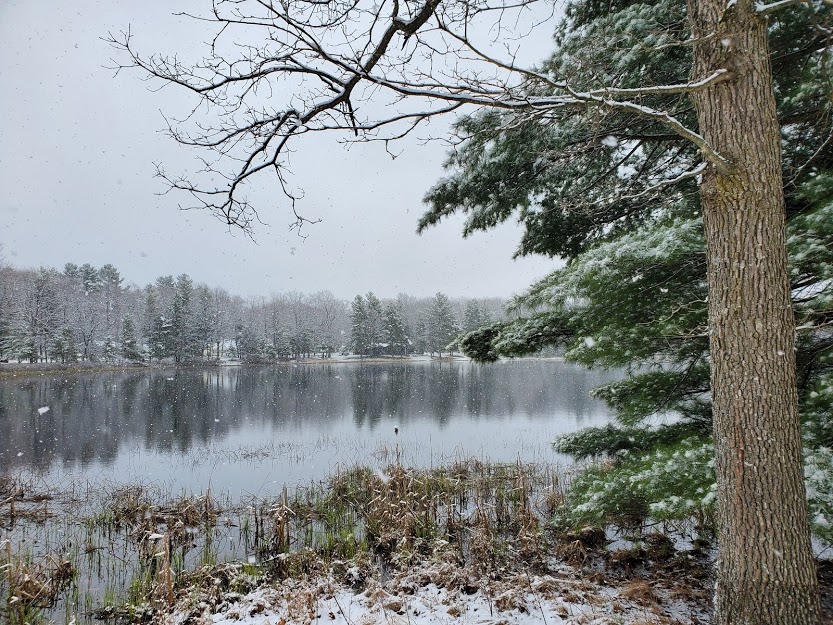
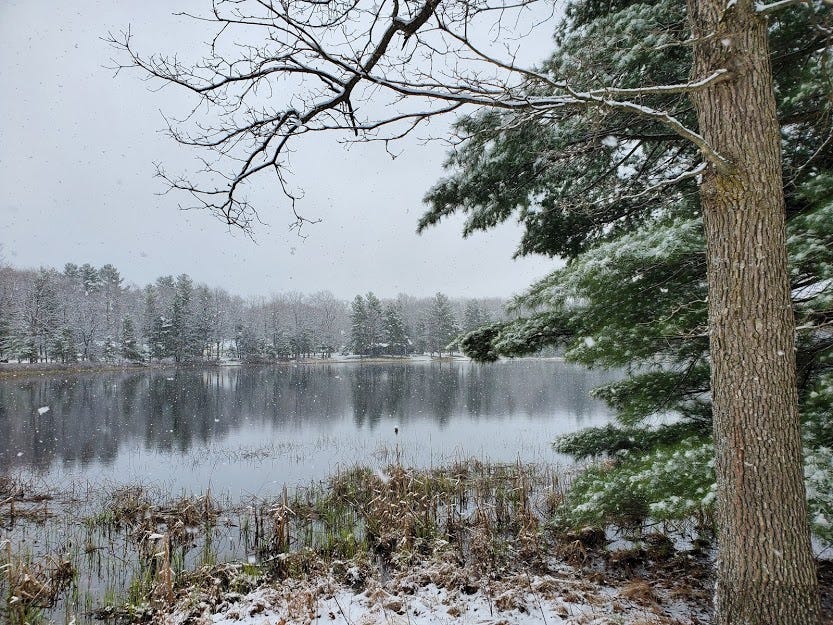
It’s that time of year when the trumpeter swans disappear from our little northern Michigan lake. My family has always called the modest home on Grass Lake “the cottage.” The Canadian geese now come and go after short visits while migrating south. The pervasive smell of fall is in the air on a brilliant late October afternoon. The leaves have turned to vivid hues of yellow and crimson, the maples leading the fall color parade, their reds deeper than usual this year. Ferns in a nearby woodlot quickly turn brown as crisp morning temperatures take a dive, and soon the giant oaks follow with their orange leaves gently falling.
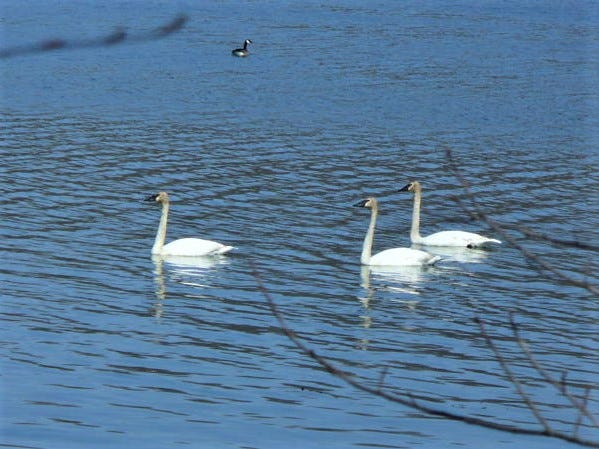
There is something about this time of year that waxes nostalgic. Perhaps it’s as simple as not being able to walk outside without a jacket or watching the ducks move on after making this beautiful lake their home for the summer. Just a few months ago, a dozen tiny ducklings appeared along the shoreline, greeting the world for the first time. They followed their mother in a straight line as if they had been trained at Army boot camp. The ducks and geese eventually leave for their faraway southern homes, where warm sun will greet them upon arrival. Reliably each spring, for 35 years, the ducks and Canadian geese have found their way back to this small corner of the world.
In Michigan, fall ushers in change and the inevitable long, cold winter soon to follow. As I grow older, this time of year reminds me how resistant to change I have become. At the local grocery stores, the most recent vintage of Michigan apple cider appears prominently on the shelves, with caramel apples topped with nuts close by. Fresh cider is the surest sign that fall has arrived.
With the season’s first batch of steaming chili in the crock pot, I sit and think about what might lie ahead. I am not planning anything grand. Life is unpredictable, and the world seems more unpredictable than ever. COVID-19 changed a lot of things for us and for the world where we live.
Two years ago in November, my best friend Joe, a former UAW shop committee member, died of cancer just five days before deer hunting season. For 33 glorious years we spent each November together in the woods during hunting season. We shared stories and tall tales from our 50-year friendship, dating back to our college glory days in East Lansing, Michigan. In more recent times, we traded books we had read over the past year, lamented the state of the world, gypsy moth invasions, old trucks, our kids, and—best of all—the deer we missed on opening day. It felt as if time stopped for that one week each year when we took to the woods, ostensibly to hunt whitetail deer. Deer camp offered a yearly respite and time for old friends to catch up. Fall will never be quite the same without Joe and hunting camp in Ogemaw County, Michigan.
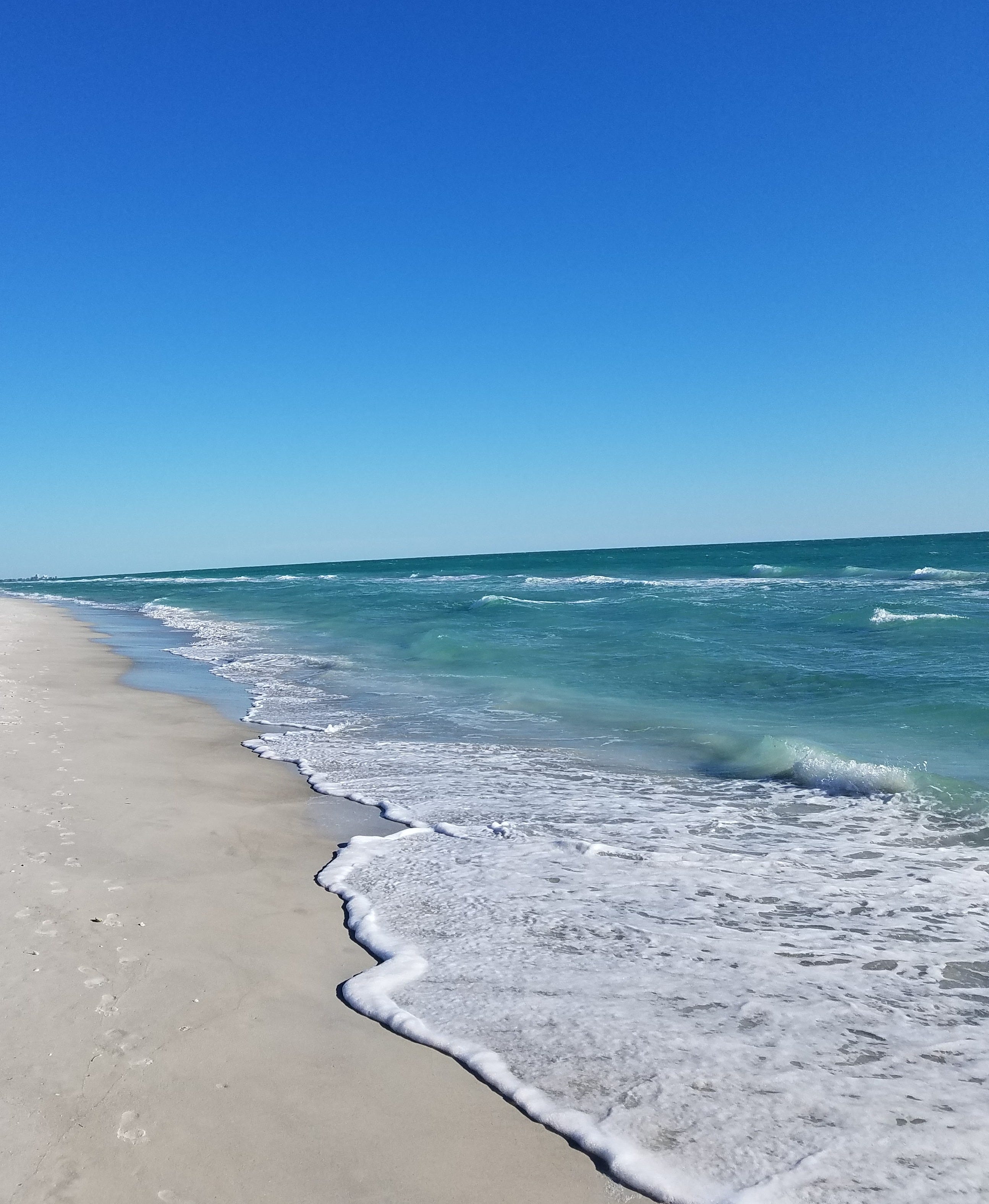
My thoughts wander to winter and to the endless summer on the Suncoast of Florida. White sand beaches, reading a good book by the pool, or starting a new art project are all in store. Mom called it “loafing.” Loafing was not seen as a positive thing by the hardworking people of Flint; she thought only the rich had time for loafing instead of working.
It is 1,325 miles to my winter retreat in Palm Harbor, Florida. That distance seems far enough to recalibrate. Realistically, it is only a two-hour flight from Tampa to Detroit, yet the distance offers perspective on another place and culture. Change is definitely in the air this fall, in more ways than one.
One of the clearest signs of fall in northern Michigan is when the outdoor thermometer hits 32 degrees at sunrise. It’s time to put away the outdoor furniture and grill. The time has come to tidy up the house, pack some clothes, and close up our beautiful cottage. Over the decades, this ritual has played out as my retired neighbors perform the same dance. Most of them are retired autoworkers, preparing to head to sun‑kissed winter enclaves like West Palm, Daytona Beach, Bonita Springs, Sarasota, and St. Pete, Florida. A few snowbirds only make it as far as the mountains of Tennessee or the beaches of South Carolina—just far enough out of reach of a winter blizzard. Come May, these snowbirds predictably return to the rolling hills of northern Michigan, tanned, and rested, having dodged another winter, perhaps the blizzard of the century or a stubborn March and April that refuse to give up.
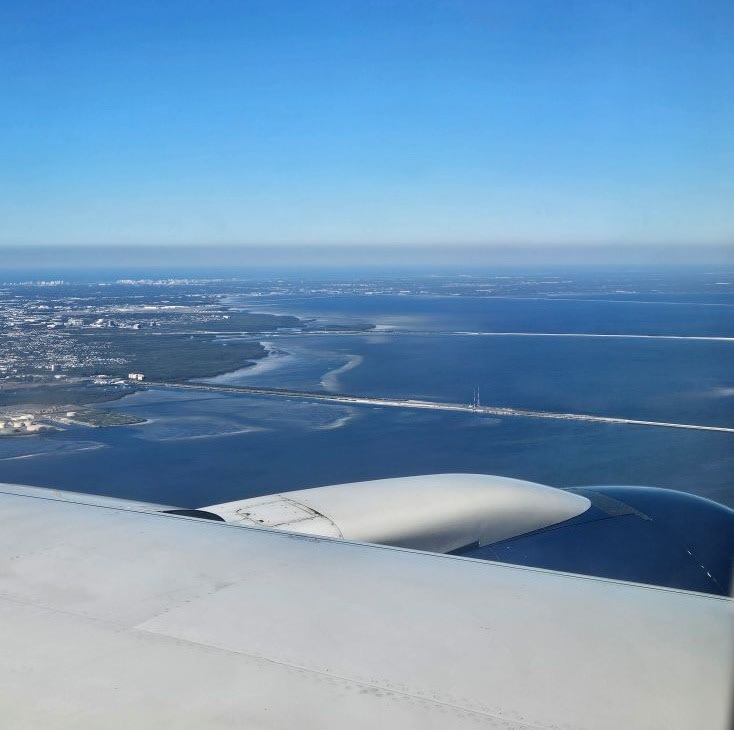
Like the geese and ducks, there is a rhythm to their comings and goings. They walk magnificent beaches, visit southern landmarks, take cruises, or enjoy city life in coastal towns. They return with stories of new friends, spring training baseball games, or trips to Caribbean islands. The snowbirds come back to Michigan’s water wonderland to enjoy reunions with children and grandchildren, boating, and the mandatory visit to Mackinac Island.
Becoming a snowbird myself was an evolutionary process. It started in the 1990s with a few weeks away each winter, which gradually became a few months. Eventually, I cut back to part‑time work, flying back and forth between homes. In recent years, many snowbirds gave up that lifestyle and sold their summer homes in Michigan. That is a bridge too far for me. Summer in Florida means oppressive heat and humidity—a peculiar version of winter in reverse. More importantly, I am scared to death of hurricanes.
Leaving family and friends for a place full of gated retirement communities and impatient drivers honking at every traffic light takes some getting used to. Some call Florida “God’s Waiting Room.” In my view, which is not an apt description. There are retirement enclaves all across America—Arizona, Texas, Georgia, and the Carolinas among them—and many are some of the most beautiful places in the nation.
I’ve asked myself many times why I became a snowbird. Why not just find one place to settle down? My fondest childhood memories in blue‑collar Flint, Michigan, include vacations on the shores of the Great Lakes, visiting Mackinac Island, and fishing for perch on Lake Huron. We loved visiting my aunt and uncle’s cottage at Higgins Lake, where our families gathered. Michigan’s water is brilliantly clear and blue, and the sandy beaches provide a superb playground for young children. Northern Michigan was simply splendid. From a young age, I dreamed of having a cottage in northern Michigan near a lake. That dream eventually came true.
Michigan is in my blood and has remained so 60 years later. Winter in Michigan, however, was never what I liked most about living there. As my parents grew older in retirement, they didn’t want to hang around Flint waiting for the next blizzard. They began visiting Florida in winter, staying in the Tampa Bay area, Bonita Springs, and later Stuart, Florida. Perhaps I am more like the ducks and geese than I realized, following the sun as they did each year.
During my senior year in high school, my best friend invited me to visit his grandparents during spring break in Bonita Springs in southwest Florida. I remember seeing an orange tree in their yard for the first time. His grandfather also had a cottage in northern Michigan. With the seed planted early, I eventually became a snowbird myself. On a visit in the early 1970s, I remember Bonita Beach littered with beautiful shells. The beaches looked like those I loved in Michigan, so it was not hard for me to fall in love with southwest Florida. Friends and I often returned to the Naples area during spring break in college and law school.
On those visits, I would go to a deserted stretch called Vanderbilt Beach, a pristine shoreline with mangroves everywhere. Wiggins Pass State Park was nearby. North Naples had yet to grow much back then. After visiting this place over parts of three decades, I knew I wanted a vacation home there.
The near disappearance of General Motors from Flint left professionals like me with stark realities to consider. It forced me to confront the slow‑motion economic decline in mid‑Michigan. The situation in Flint was particularly demoralizing. It soon became clear that my children would never stay in Flint after high school. That indeed became our reality.
I used to think the desire to leave home was for young people eager to explore the world and find their way. Wherever you go at my age, you likely feel you have nothing left to prove. After nearly 40 years working in criminal law, I felt a deep desire to find a place of peace. I did my part in Flint, Michigan, to make things better. It is time for new generations of Flintstones to carry on and shape a community of their own design. As for me, the time has come to follow the birds and the seasons and, at last, to fly away to place where my dreams were made.
Thank you for reading and visiting my substack. I hope to be able to share my Michigan memories with anyone who is homesick this winter. Arthur

Founder and Host of Radio Free Flint Podcast
Arthur Busch is a veteran lawyer and educator with an acclaimed record of success in high-profile cases. He was a Prosecutor and community leader for decades.
Arthur Busch grew up in rust belt Flint, Michigan, just three blocks from the former General Motor's Fisher Body Plant #1. The auto factory was the site of the historic sitdown strike that gave birth to the United Automobile Workers Union.
Mr. Busch holds a BA in Urban Public Policy, and a Masters's Degree in Labor and Industrial Relations from Michigan State University as well as a Juris Doctorate from Thomas Cooley Law School in Lansing, Michigan. He attended Flint Public Schools.

From Flint Factories to Freedom: Redefining 'Home' and Identity